
SYNONYMINS A COLLECTION OF WORDS
Using other ways to say “I appreciate your help” is more than a stylistic choice—it’s a practical skill that improves vocabulary, tone, clarity, reader engagement, and SEO performance. Whether you’re writing emails, blog posts, presentations, or customer messages, repeating the same phrase can sound flat or impersonal.
By learning alternative phrases and synonyms, you can:
- Match the right tone for professional communication
- Sound more natural and confident in content writing
- Improve writing improvement for emails, email sign-offs, and public-facing content
- Enhance readability for global and non-native English readers
Just as writers look for other ways to say “hope you enjoyed” to avoid repetition, expanding how you express appreciation helps your communication feel thoughtful, polished, and intentional.
Categorized Alternatives to “I Appreciate Your Help”
Below are 18 carefully categorized alternatives, organized by tone and context. Each phrase includes meaning, tone level, best use cases, an example sentence, and usage warnings.
Formal Alternatives
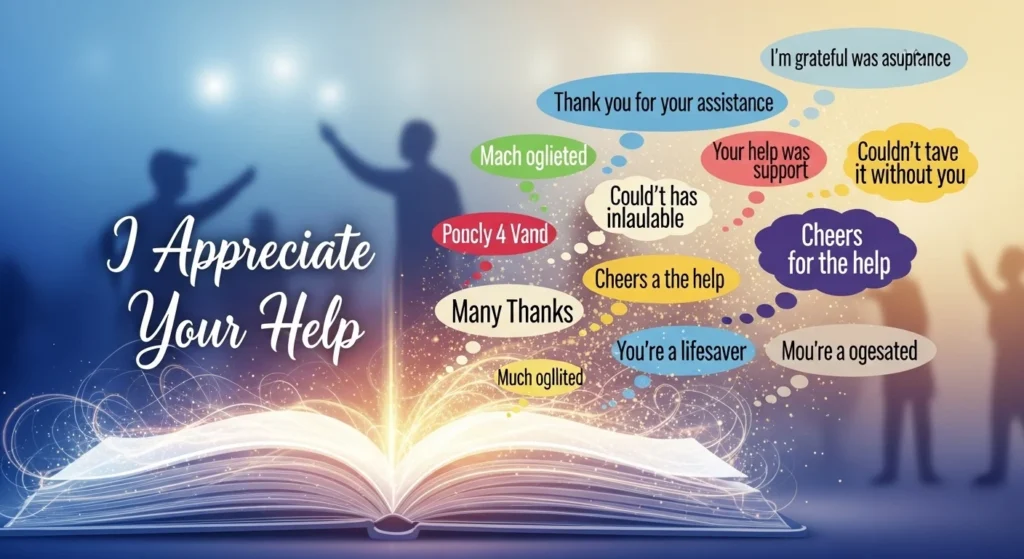
1. “I Am Grateful for Your Assistance”
- Meaning: A respectful acknowledgment of help received
- Tone: Formal
- Best Use Cases: Official emails, academic writing, formal letters
- Example: I am grateful for your assistance in reviewing the final report.
- Usage Warning: Sounds stiff in casual or friendly conversations
2. “Thank You for Your Support”
- Meaning: Appreciation for ongoing or general help
- Tone: Formal to neutral
- Best Use Cases: Corporate emails, presentations, global business
- Example: Thank you for your support throughout this process.
- Usage Warning: Can feel generic if overused without specifics
3. “Your Help Is Greatly Appreciated”
- Meaning: Polite, indirect expression of thanks
- Tone: Formal
- Best Use Cases: Announcements, policy emails, official notices
- Example: Your help is greatly appreciated as we finalize the transition.
- Usage Warning: Less personal than direct “I” statements
Professional / Business Alternatives
4. “Thank You for Your Help on This”
- Meaning: Direct acknowledgment of task-specific help
- Tone: Neutral-professional
- Best Use Cases: Work emails, internal communication
- Example: Thank you for your help on this—I couldn’t have met the deadline otherwise.
- Usage Warning: Too plain for high-stakes or executive communication
5. “I Appreciate Your Time and Effort”
- Meaning: Recognition of both contribution and commitment
- Tone: Professional, warm
- Best Use Cases: Client emails, team messages
- Example: I appreciate your time and effort in addressing these concerns.
- Usage Warning: Avoid if the help was minimal—it may sound exaggerated
6. “Thanks for Going the Extra Mile”
- Meaning: Praise for effort beyond expectations
- Tone: Warm, professional
- Best Use Cases: Performance feedback, leadership emails
- Example: Thanks for going the extra mile to resolve the issue so quickly.
- Usage Warning: Informal for strict corporate or legal writing
7. “Much Appreciated”
- Meaning: Short, efficient thanks
- Tone: Neutral
- Best Use Cases: Quick emails, chat tools, email sign-offs
- Example: Much appreciated—this clarification helps a lot.
- Usage Warning: Too brief for relationship-building messages
Informal / Casual Alternatives
8. “Thanks a Lot for Your Help”
- Meaning: Friendly and sincere appreciation
- Tone: Casual, warm
- Best Use Cases: Team chats, friendly emails
- Example: Thanks a lot for your help—I really needed that input.
- Usage Warning: Not suitable for formal or external business emails
9. “I Really Appreciate It”
- Meaning: Emphasized personal thanks
- Tone: Casual, sincere
- Best Use Cases: Conversations, informal writing
- Example: I really appreciate it—you saved me a lot of time.
- Usage Warning: Vague if you don’t mention what you appreciate
10. “Thanks for Having My Back”
- Meaning: Appreciation for support or protection
- Tone: Casual, friendly
- Best Use Cases: Team culture, informal conversation
- Example: Thanks for having my back during the meeting.
- Usage Warning: Too informal for professional or cross-cultural settings
Creative / Friendly Alternatives
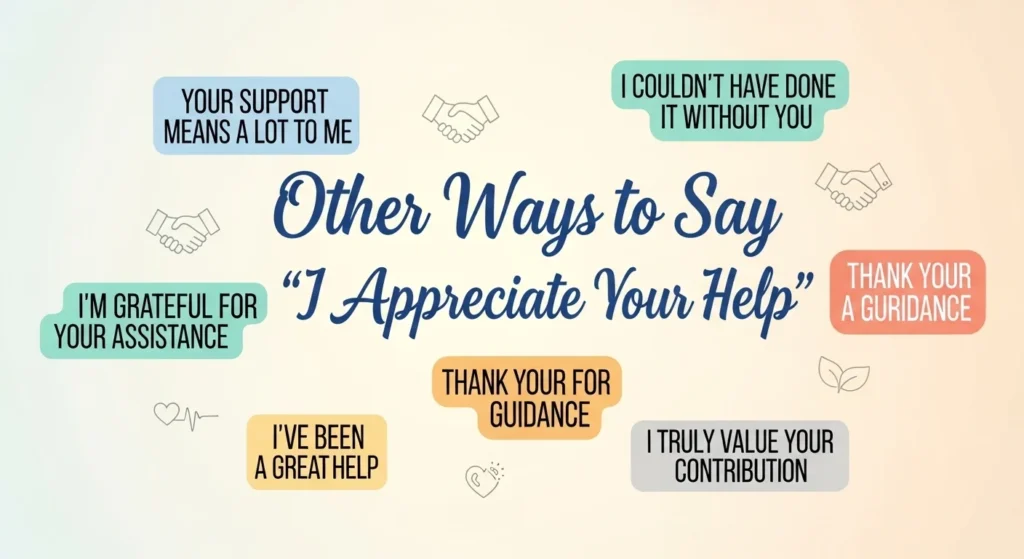
11. “I Couldn’t Have Done This Without You”
- Meaning: Strong recognition of contribution
- Tone: Warm, enthusiastic
- Best Use Cases: Speeches, thank-you notes
- Example: I couldn’t have done this without you—your guidance mattered.
- Usage Warning: Overly emotional for routine tasks
12. “Many Thanks for Your Help”
- Meaning: Polite but friendly appreciation
- Tone: Neutral-warm
- Best Use Cases: Emails, blog comments
- Example: Many thanks for your help in clarifying the details.
- Usage Warning: Slightly old-fashioned in very casual contexts
13. “Thanks So Much”
- Meaning: Enthusiastic gratitude
- Tone: Friendly
- Best Use Cases: Social media, casual messages
- Example: Thanks so much for stepping in at the last minute!
- Usage Warning: Too enthusiastic for serious professional topics
14. “Appreciate the Support”
- Meaning: Short, modern expression of thanks
- Tone: Casual-neutral
- Best Use Cases: Slack, internal messages
- Example: Appreciate the support—this really helps.
- Usage Warning: Incomplete sentence in formal writing
“Other Ways to Say Stay Tuned: 50+ Phrases to Keep Your Audience Engaged”
15. “I’m Thankful for Your Help”
- Meaning: Personal, reflective gratitude
- Tone: Warm
- Best Use Cases: Messages with emotional context
- Example: I’m thankful for your help during such a busy time.
- Usage Warning: Sounds emotional in purely transactional communication
16. “Thanks for the Assist”
- Meaning: Casual acknowledgment of help
- Tone: Informal
- Best Use Cases: Friendly work environments
- Example: Thanks for the assist on the presentation slides.
- Usage Warning: Slang-like in formal writing
17. “Your Help Meant a Lot”
- Meaning: Emotional appreciation
- Tone: Warm, sincere
- Best Use Cases: Personal messages, feedback
- Example: Your help meant a lot when I was under pressure.
- Usage Warning: Too personal for routine business emails
18. “Thanks for Stepping In”
- Meaning: Appreciation for timely intervention
- Tone: Friendly-professional
- Best Use Cases: Team communication
- Example: Thanks for stepping in to handle the client call.
- Usage Warning: Context-specific—don’t use if no urgency was involved
Tone & Context Comparison (Expanded)
Polite vs Friendly vs Enthusiastic
- Polite: “I am grateful for your assistance”
- Friendly: “Thanks a lot for your help”
- Enthusiastic: “I couldn’t have done this without you!”
Tone Mismatch Examples
- Using “Thanks for having my back” in a legal email can reduce credibility
- Writing “Your help is greatly appreciated” in a casual chat may feel cold
Negative Impact of Mismatch:
Real-Life Usage Examples
Business Email
Thank you for your support in finalizing the proposal ahead of schedule.
Presentation
I appreciate your time and effort in making this project successful.
Blog Post
Many thanks to our contributors—I truly appreciate your help behind the scenes.
Customer Support
Thanks so much for your patience and cooperation.
Social Media Caption
Couldn’t have done this without you—appreciate the support!
Cultural & Regional Usage Notes
- US English: Friendly phrases are widely accepted in workplaces
- UK English: Slightly more formal wording is preferred in emails
- Global Business: Neutral-professional phrases work best
Avoid overly enthusiastic language in cultures that value restraint.
Quick Comparison Table
| Phrase | Tone | Best Context |
| I Am Grateful for Your Assistance | Formal | Official emails |
| Thank You for Your Support | Professional | Business communication |
| I Really Appreciate It | Casual | Conversation |
| Much Appreciated | Neutral | Email sign-offs |
| I Couldn’t Have Done This Without You | Enthusiastic | Speeches |
Conclusion & Call to Action
Learning other ways to say “I appreciate your help” strengthens your communication, improves professionalism, and enhances overall writing quality. The right phrase builds trust, shows respect, and leaves a lasting impression.

Jamie Watson is a passionate language writer who loves exploring meanings, synonyms, phrases, and different ways to say things. With a deep interest in words and their power, Jamie breaks down complex language into simple, clear, and easy-to-understand explanations. From everyday expressions to formal alternatives, Jamie’s goal is to help readers expand their vocabulary, improve communication, and choose the right words for every situation.